
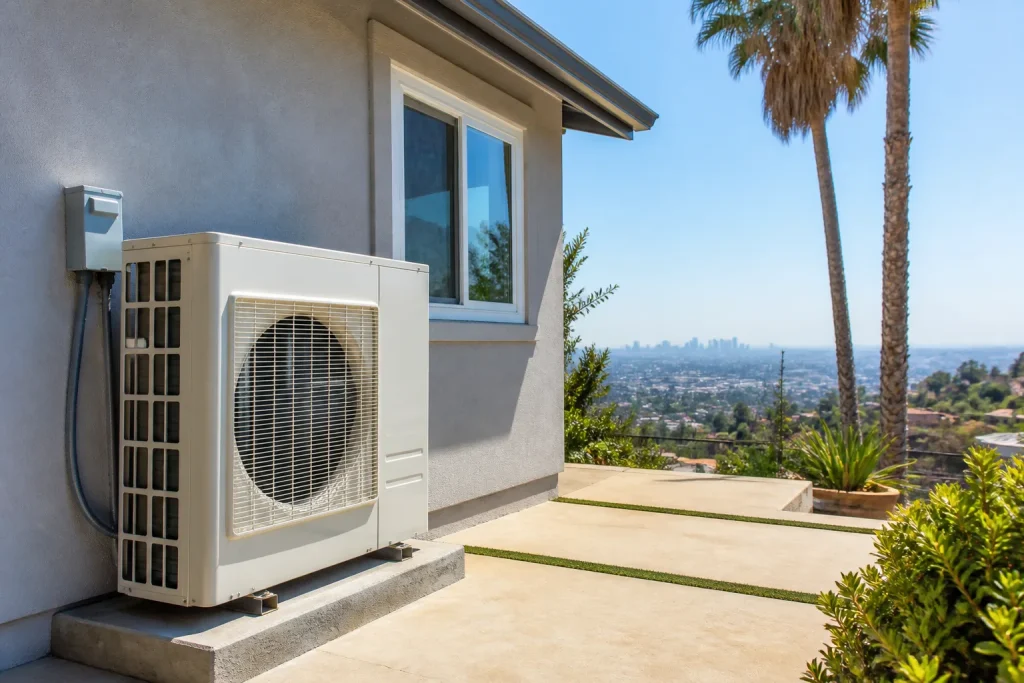
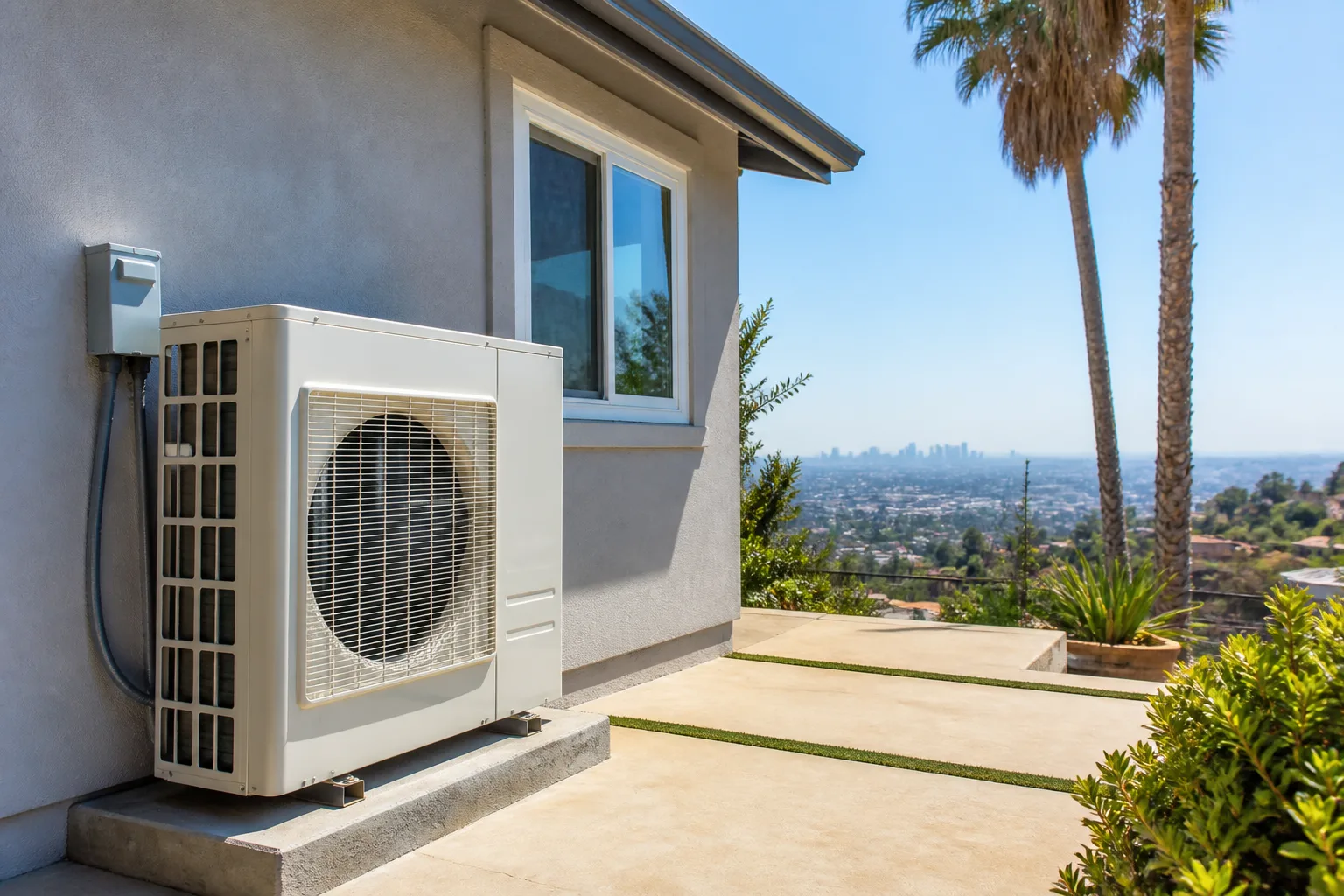
Heat Pump & Mini Split: Repair or Replace? How Los Angeles Homeowners Decide
Most mini split “failures” we get called out to in Los Angeles aren’t equipment failures at all — they’re installation failures that finally caught up with the homeowner. After 19 years of hands-on HVAC work across LA, we’ve learned the repair-or-replace decision comes down to one question: was this unit sized and installed correctly from day one? A botched install at year one makes replacement the smart call at year six; a solid install can justify repair at year twelve. If you’d rather not sort this out alone, Meridian Heating & Air Los Angeles offers free estimates — call (877) 454-5066.
Why Installation Quality Matters More Than Equipment Age
Homeowners in Los Angeles often assume a six-year-old mini split failing means they got a lemon. In our experience, the real culprit is usually hiding in the walls. We pulled one out of a garage over in Koreatown last month where the refrigerant lines had been kinked during the original install, starving the compressor for years until it finally seized. The customer thought they needed a new brand; what they actually needed was a new installer.
Here’s how to spot whether your problem is the unit or the original work:
- Refrigerant leaks at flared connections. Proper flaring takes time and a calibrated tool. Rushed jobs create micro-leaks that show up as “low charge” calls every summer. If your tech keeps adding refrigerant but never replaces the flare nuts, you’re patching a workmanship problem.
- Undersized electrical circuits. Mini splits need dedicated runs with correct breaker sizing. We’ve found 15-amp breakers on 24,000-BTU units in Mid-City homes, causing nuisance trips the homeowner blamed on “electrical gremlins.”
- Improper line-set routing. Refrigerant lines need gradual bends, not sharp angles, and proper insulation throughout. Lines running through unconditioned attic space in Los Angeles without insulation absorb heat and kill efficiency.
- Condensate drainage pitched wrong. Water damage around the indoor unit often gets blamed on humidity. It’s usually a level or pitch issue from install day.
When we see these patterns, we tell Los Angeles homeowners straight: repair the component, and you’ll be back in a year or two for the next symptom of the same root cause. Replace with proper installation, and you’re buying 12 to 15 years of quiet operation.
The Real Age-and-Cost Thresholds for LA’s Climate
National HVAC advice says replace at 10 years or when repairs exceed half the replacement cost. That guidance ignores how Los Angeles weather treats heat pumps differently than Minneapolis or Miami.
Our climate zone — mild winters, dry summers, minimal freeze-thaw cycling — is gentle on outdoor coils and compressors. A properly installed heat pump or mini split in Los Angeles doesn’t work nearly as hard as one in extreme climates. We’ve serviced Carrier and Trane units in Pasadena and Alhambra that hit 14 years and still pulled within 10% of their original efficiency. Conversely, we’ve replaced seven-year-old Lennox systems in Venice where salt air corrosion and a coastal install without proper coil protection accelerated aging.
Our practical thresholds for Los Angeles:
- Under 8 years, repair under $800: Almost always worth fixing, assuming the install was competent.
- 8–12 years, repair $800–$1,500: Get a second opinion from an independent tech. Ask specifically: “What caused this failure, and will that cause still exist after the fix?”
- Over 12 years, any major repair: Start pricing replacement. Even in LA’s gentle climate, compressor technology and efficiency standards have moved significantly.
- Any age, refrigerant type R-22: Replacement is the only rational choice. Reclaimed R-22 costs have made even simple repairs uneconomical in Los Angeles.
The “half the replacement cost” rule still works as a gut check, but factor in your actual install quality and neighborhood conditions. A mini split in dry, stable Northridge ages differently than an identical unit in fog-adjacent Marina del Rey.
What a Second Opinion Actually Reveals
Here’s something the industry doesn’t advertise: the company that installed your mini split has a built-in incentive to recommend replacement. If their original work was substandard, every repair call risks exposing flared connections, kinked lines, or electrical shortcuts. We’ve been called in as the second opinion on jobs where the installing contractor suddenly discovered the unit was “uneconomical to repair” — and found a $200 contactor fix that solved everything.
Conversely, we’ve also told homeowners their five-year-old Goodman was genuinely done, then learned the original installer had already offered a repair quote. The difference? We traced the failure to its root cause — a manufacturing defect in a specific compressor batch — and could show the customer exactly why repair was throwing money away.
When you call for a second opinion in Los Angeles, ask for three things:
- A written diagnosis with the specific failed component identified, not “the system is shot.”
- A photo or video of the failure point. Any tech working on a mini split in 2026 has a phone with a camera.
- The refrigerant pressure readings before and after any recharge. Numbers don’t lie about whether you’re chasing a leak.
At Meridian Heating & Air Los Angeles, we treat second-opinion calls as a standard part of the job, not an inconvenience. Anthony shows up on these himself — it’s how we’ve built a 4.8-star average across 286 reviews over nearly two decades.
How LA’s Mild Winters Change Heat Pump Longevity
This is where generic national advice really misses for Los Angeles homeowners. Heat pumps in cold climates switch to auxiliary electric resistance heat below 35°F, which strains electrical components and drives up operating costs. That cycling stress shortens lifespan. In Los Angeles, your heat pump rarely sees sustained temperatures below 40°F. The compressor does less extreme work, defrost cycles are shorter, and the reversing valve — a common failure point — cycles less frequently.
What this means for your repair-or-replace math:
- Compressor longevity: Expect 2–4 years more than national averages. A 12-year-old compressor in LA has roughly the wear of a 9-year-old unit in Chicago.
- Reversing valve failures: Less common here, but when they happen, replacement cost is high enough that we usually recommend full unit replacement if the system is over 10 years.
- Coil condition: Our dry climate prevents the ice buildup and freeze-thaw damage that kills coils elsewhere. Salt air near the coast is the exception — we’ve replaced coils in Santa Monica at year eight that would have lasted 15 inland.
The flip side: because heat pumps run efficiently year-round in Los Angeles, they accumulate more total runtime hours than seasonal-only systems. A 10-year-old unit here may have the operating hours of a 13-year-old unit in a four-season climate. We check runtime data through the controller when available, not just calendar age.
When to Call a Pro — And What to Ask First
Some situations don’t warrant debate. Call for same-day service if your mini split won’t power on, is blowing warm air in cooling mode, or is making grinding or hissing noises. Those are safety or comfort emergencies in Los Angeles summer heat.
For slower-developing problems — rising electric bills, uneven cooling, occasional error codes — schedule a diagnostic and ask this exact question before authorizing any repair quote: “What caused this failure, and will that cause still exist after the fix?”
If your tech can’t answer specifically, or gives you “these things just wear out,” you’re not getting a diagnosis. You’re getting a transaction. At Meridian, we explain the failure mode because we’ve seen what happens when we don’t. The customer who understands why their contactor welded shut is the customer who knows whether to repair or replace.
Related services in Los Angeles: For homeowners considering full replacement, our Heat Pump & Mini Split in Sacramento page details sizing and installation standards — the same approach we bring to every Los Angeles job. We also handle AC Repair & Installation in Sacramento and Heating & Furnace in Sacramento with the same owner-led service model.
Key Takeaways
- Installation quality, not equipment age, is the dominant factor in whether to repair or replace your Los Angeles mini split.
- LA’s mild climate extends heat pump lifespan compared to national averages, but coastal salt air and total runtime hours matter too.
- Always ask what caused the failure and whether that root cause will persist after repair.
- Second opinions from independent, experienced techs protect you from both unnecessary replacement and repeated repairs on fundamentally flawed systems.
- R-22 refrigerant, major compressor failures after year 10, and repeated electrical issues are strong signals to replace rather than repair.
The Bottom Line
The repair-or-replace decision on a heat pump or mini split in Los Angeles isn’t a formula you plug numbers into. It’s a judgment call based on how the system was originally installed, what actually failed, and whether your climate and usage pattern justify the investment. We’ve guided homeowners through this call for nearly two decades, and the right answer is almost always clearer once you look past the symptom to the cause.
If you’re in Los Angeles and staring at a repair quote you don’t trust, or a system that’s failed twice in two years, Meridian Heating & Air Los Angeles offers free estimates with no pressure to commit. Anthony Moreno handles these evaluations personally — you’ll get the same hands-on assessment we’d want for our own homes. Call (877) 454-5066.
Frequently Asked Questions
Most common repairs run $200–$600: contactor or capacitor replacement, refrigerant recharge with leak repair, or controller board fixes. Compressor replacement or reversing valve work typically hits $1,200–$2,500, which is when replacement math becomes relevant. Coastal installs or units with poor access can add 15–20% to labor. Call (877) 454-5066 for an exact quote — estimates are free.
Repair is cheaper today; replacement is usually cheaper over the next five years if your unit is over 10 years old, uses R-22, or has a history of installation-related problems. We run operating cost comparisons for Los Angeles utility rates when homeowners are on the fence. The break-even point often surprises people.
A properly installed, well-maintained mini split in LA’s climate can approach 18–20 years, but 12–15 is more realistic for most units given actual maintenance habits and install quality. We’ve seen two Trane systems in the San Fernando Valley hit 19 years; both had annual service and original installs by factory-certified techs. Those are outliers, not expectations.
Refrigerant doesn’t get consumed — if you’re adding charge repeatedly, you have a leak. In Los Angeles, the most common leak sources are improper flare connections from the original install, vibration wear at line-set penetrations, or corrosion on outdoor coil joints. Adding refrigerant without finding and fixing the leak point is malpractice. We use electronic leak detection and nitrogen pressure testing to locate the exact source before quoting any repair.
Written by Anthony Moreno, Founder & Lead Installer at Meridian Heating & Air Los Angeles, serving Los Angeles since 2007.
Need HVAC Help?
Call Meridian Heating & Air Los Angeles — licensed & insured, here with fast after-hours help in Los Angeles.
(877) 454-5066