
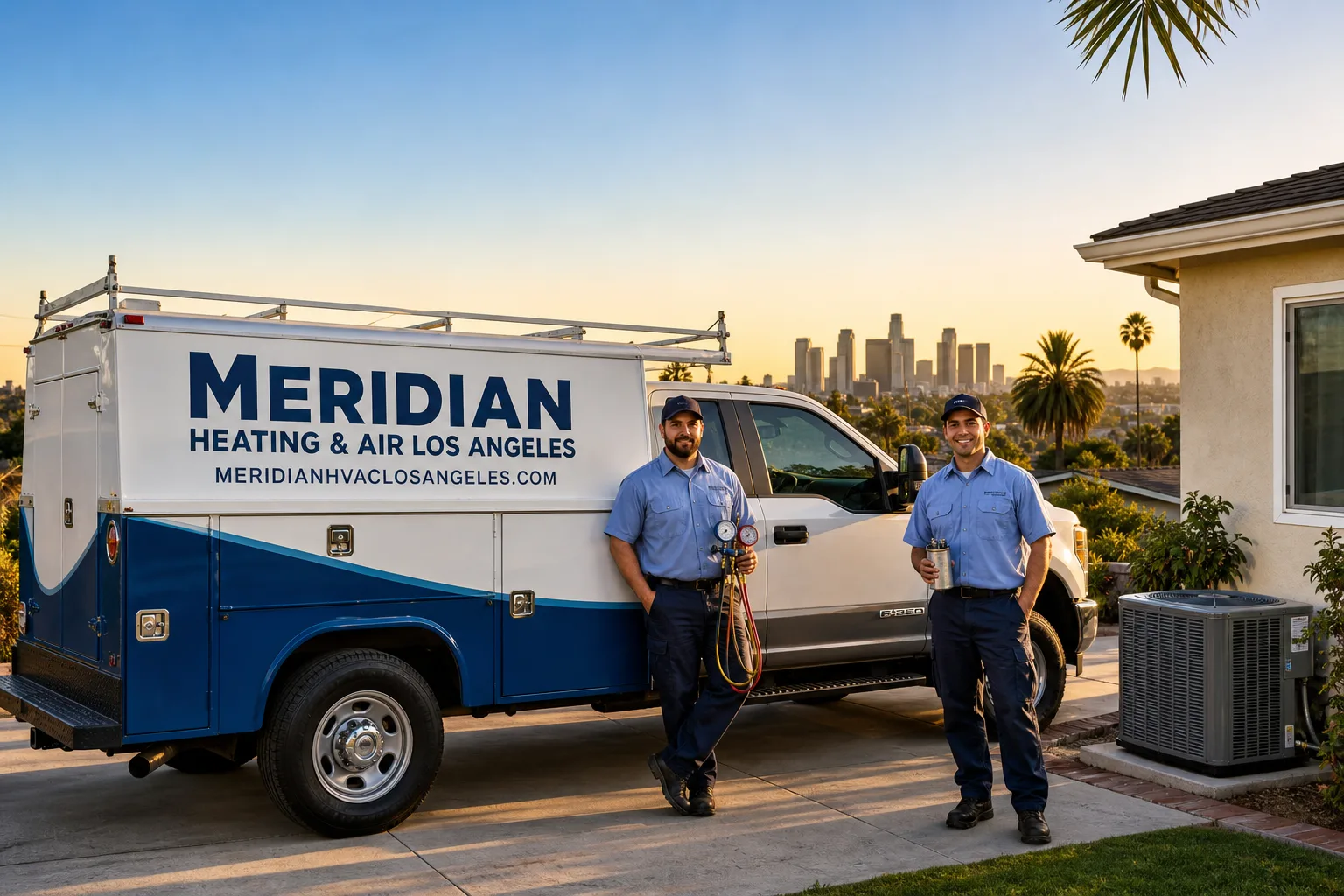
Fast, Reliable Heat Pump & Mini Split Across San Francisco
Heat pump and mini-split installation in San Francisco typically runs $4,130–$8,850 for a full system, with same-week scheduling available for most projects. We serve the Victorian flats of the Mission District, the hillside homes of Noe Valley, and the dense multi-unit buildings of Chinatown, where ductless systems aren’t just preferred — they’re often the only practical option. Call (877) 454-5066 for a free estimate.
San Francisco’s housing stock is unlike anywhere else in the country. The ZIP codes we cover — 94111, 94112, 94114, 94115 — are packed with pre-1920 Victorian and Edwardian multi-unit flats built with lath-and-plaster walls, shared party walls, and narrow floor-to-ceiling cavities that leave almost no viable path for conventional duct runs. Many units still rely on original Wedgewood or Rinnai in-wall gas heaters as their sole heat source. That makes system modernization a near-ground-up retrofit rather than a straightforward replacement. We’ve been navigating these constraints for nearly two decades, and our Heat Pump & Mini Split team has developed specific techniques for routing line sets through chimney chases, crawl spaces, and exterior walls without destroying historic plaster.
Why Meridian Heating & Air Los Angeles Is San Francisco’s Preferred Heat Pump & Mini Split Company
286 customers and counting have left us reviews averaging 4.8 stars, and that track record spans nearly two decades of founder-led work — not a short burst of activity followed by franchise expansion. Anthony Moreno, our Founder & Lead Installer, still shows up on the job. In San Francisco, that means he’s the one measuring clearances in a Tenderloin studio, evaluating structural loads for a rooftop condenser in SoMa, or determining whether a Nob Hill building’s electrical panel can handle a multi-zone mini-split load.
Our familiarity with San Francisco’s specific conditions saves time and prevents callbacks. We know that a bay-facing installation in 94111 needs marine-grade coil protection before the first power-on. We know that a Mission District flat’s balloon-frame construction means we can’t just punch through walls arbitrarily. And we know that fog-belt microclimates in the Sunset can mask compressor issues that only show up during rare heat-dome events in September.
Response time matters when your wall heater fails in January and your building has no other heat source. We prioritize San Francisco calls for emergency HVAC service and keep common mini-split components in stock for faster turnaround on repairs.
Our Heat Pump & Mini Split Services in San Francisco
Heat Pump Repair
San Francisco’s marine layer keeps most days in a 50–65°F band, but that narrow range creates a specific failure pattern: heat pumps that run constantly at partial load never get a full rest cycle, wearing contactors and capacitors faster than systems in climates with sharper on/off seasons. When late-summer heat domes push historically cool neighborhoods past 90°F, we see a surge in compressor strain calls from units that were never sized for that load. We diagnose these issues with load calculations that account for San Francisco’s microclimate swings, not generic Bay Area assumptions.

Heat Pump Installation
Full heat pump installation in San Francisco runs $4,130–$8,850 depending on system size, electrical upgrades, and line-set routing complexity. In Victorian flats with zero existing ductwork, we often pair a ductless air handler with a small-duct high-velocity system where wall space allows, or go fully ductless with multiple heads. We size for both the fog-belt baseline and the increasing frequency of heat-dome peaks. Every outdoor unit we install in bay-facing or ocean-facing exposures gets marine-grade coil coating as standard — skipping this step is why we see so many premature compressor failures in 94105 and 94111.

Mini Split Install
Mini-split installation is our most common service call in San Francisco, and for good reason: the city’s Victorian and Edwardian flats, built between roughly 1880 and 1915, were constructed entirely without ductwork or central HVAC systems. Because lath-and-plaster walls, balloon-frame construction, and zero existing duct chases make forced-air retrofits prohibitively invasive and expensive, virtually every HVAC upgrade job in these neighborhoods defaults to ductless mini-split installation — a work profile almost no other major U.S. city matches at this scale. We replaced a failing wall-mounted gas heater in a Mission District flat with a Daikin multi-zone mini-split system, routing lines through an unused chimney chase to avoid lath-and-plaster damage. Despite the tight 50–65°F marine layer climate, we installed marine-grade coil coatings on the outdoor unit to preempt salt-air corrosion — a must for any bay-facing exposure.

Mini Split Repair
Salt-laden marine air corrodes outdoor condenser coils and fins 2–3 years faster than inland, especially in ZIPs 94105 and 94111. We see refrigerant leaks at flare connections, failed fan motors bearing seized from salt deposits, and control board failures from moisture intrusion. Our repairs address the root cause, not just the symptom: if corrosion is the pattern, we’ll recommend relocating the condenser, adding a protective housing, or upgrading to a coated coil on replacement.

Multi-Zone System
SoMa flats and Chinatown SRO conversions often need independent temperature control for 3–6 rooms with a single outdoor condenser. Multi-zone mini-splits let each tenant or household member control their own space without fighting over a central thermostat. We size these carefully — San Francisco’s shared-wall construction means heat bleeds between units, and oversizing leads to short-cycling that kills efficiency and comfort.

Ductless System
For Visitacion Valley homes and Noe Valley in-law units where adding ductwork would mean major demolition, ductless systems are the straightforward solution. We mount the indoor high on a wall or recessed in a ceiling, run refrigerant lines and power through a 3-inch hole, and place the outdoor unit where marine exposure is minimized. Most single-zone installs complete in one day.

What happens when you call
- 1
A real person answersNo phone trees — you reach a local pro.
- 2
You get an upfront price rangeHonest numbers before anyone is dispatched.
- 3
A background-checked tech heads outLicensed & insured, dispatched right away.
- 4
You approve before work beginsNothing starts until you say go.
Trusted Brands We Service in San Francisco
We work on your brand — whether it’s a Trane heat pump in a Potrero Hill commercial building, a Lennox mini-split in a Noe Valley cottage, a Goodman system in a Mission District rental, or a Rheem unit in a Chinatown apartment complex. Our experience across nine major manufacturers means we stock common parts for faster San Francisco repairs and can recommend the right equipment for your specific building constraints rather than pushing whatever’s in the warehouse. For salt-air exposures, we specify coated coils and corrosion-resistant hardware regardless of brand.
Common Heat Pump & Mini Split Problems We See in San Francisco Homes
- Salt-air corrosion on bay-facing condensers. Outdoor units in 94105 and 94111 corrode fins and coils years ahead of inland units. We catch this early with annual inspections and specify marine-grade protection on every new install.
- Refrigerant leaks from micro-vibration in balloon-frame walls. San Francisco’s old wood framing shifts seasonally, stressing flare connections in line sets run through wall cavities. We use proper support and flexible sections where movement is likely.
- Compressor strain from microclimate swings. A system sized for fog-belt 55°F struggles when September heat domes push the same neighborhood to 95°F. We size for the full range and check charge levels before peak season.
- Inadequate electrical service in pre-1920 flats. Many Victorian buildings still have 60-amp service panels. Adding a heat pump or multi-zone mini-split often requires a panel upgrade — we assess this during our first site visit, not mid-install.
Pricing for Heat Pump & Mini Split in San Francisco, CA
A typical mini-split install in San Francisco runs $4,130–$8,850 for a single-zone system, with multi-zone and whole-home heat pump installations at the higher end. Tune-ups, which we recommend annually given the salt-air exposure, run $95–$235. What moves the number: line-set routing complexity in lath-and-plaster walls, electrical panel capacity, whether marine-grade coatings are needed, and how many indoor zones you’re feeding from one outdoor unit.
| Service | Price Range in San Francisco |
|---|---|
| AC / Heat Pump Installation | $4,130 – $8,850 |
| Annual Tune-Up | $95 – $235 |
We don’t quote over the phone for installation work — every San Francisco building has surprises behind those plaster walls. Call (877) 454-5066 for a free, no-obligation estimate. We’ll assess your space, explain your options, and give you a firm number before any work starts.
We Also Serve Cities Near San Francisco
Our service area extends throughout the city and into neighboring communities. We regularly install and repair heat pumps and mini-splits in the Mission District, where Victorian flats line nearly every block; Noe Valley, with its hillside homes and challenging access; Chinatown, where dense multi-unit buildings demand creative ductless solutions; and Visitacion Valley, where postwar housing stock presents different retrofit challenges than the city’s older core.
Serving San Francisco, CA — Our Local Coverage Area
We’re based in the San Francisco area and know this community well. Use the map below to see our service coverage — if you’re nearby, we can almost certainly help.
FAQs — Heat Pump & Mini Split in San Francisco
Salt-laden marine air accelerates corrosion of outdoor condenser coils, fins, and electrical connections by 2–3 years compared to inland installations. We specify marine-grade coil coatings, elevated mounting where possible, and annual maintenance to catch early degradation. Call (877) 454-5066 to schedule a corrosion inspection.
Yes, in most cases. Ductless mini-splits require only a 3-inch penetration for refrigerant lines and power, and we often route through chimney chases, crawl spaces, or exterior walls to avoid disturbing lath-and-plaster interiors. We replaced a failing wall-mounted gas heater in a Mission District flat with a Daikin multi-zone mini-split system, routing lines through an unused chimney chase to avoid lath-and-plaster damage. Call (877) 454-5066 for a site-specific assessment of your flat.
The city’s sharp microclimate swings — from 55°F fog-belt mornings to 90°F+ heat-dome afternoons in the same neighborhood — stress compressors and refrigerant systems designed for narrower temperature ranges. We size systems for the full local range and verify charge levels before peak season to prevent performance drops. Call (877) 454-5066 to review whether your current system is properly sized for San Francisco’s conditions.
We install and service Trane, Lennox, Goodman, and Rheem units with factory or aftermarket marine-grade coil protection for bay-facing and ocean-facing exposures. The right brand depends on your building’s electrical capacity, space constraints, and whether you need single-zone or multi-zone coverage. Call (877) 454-5066 and we’ll match the equipment to your specific San Francisco location.
If your SoMa flat has more than one room and you want independent temperature control, a multi-zone mini-split is usually the right choice. Shared-wall construction in San Francisco means heat bleeds between spaces, and a single head often creates hot and cold spots. We size multi-zone systems to avoid short-cycling while giving each room its own thermostat. Call (877) 454-5066 for a free estimate on multi-zone options for your building.
Ready to get your San Francisco home or building set up with reliable heating and cooling? Call Meridian Heating & Air Los Angeles at (877) 454-5066 for a free estimate. Anthony Moreno, our Founder & Lead Installer, will assess your space, explain your options in plain language, and give you a firm quote before any work begins. From routine tune-ups to emergency calls, we’re here to keep your San Francisco property comfortable through every microclimate swing.
Written by Anthony Moreno, Owner at Meridian Heating & Air Los Angeles, serving San Francisco and surrounding communities since 2005.